MBA Surf Blog
Why treating the MBA Failure Essay as a redemption arc is the most overused approach in MBA applications
TL;DR: Stop writing your failure essay like a redemption story. Admissions committees are not looking for a hero who saved the day after a minor stumble. They are running a diagnostic on your mind. They want to see if you can perform a brutal, unsentimental root cause analysis on your own judgment. The essay is a test of your analytical maturity, not your resilience. Most applicants fail this test.
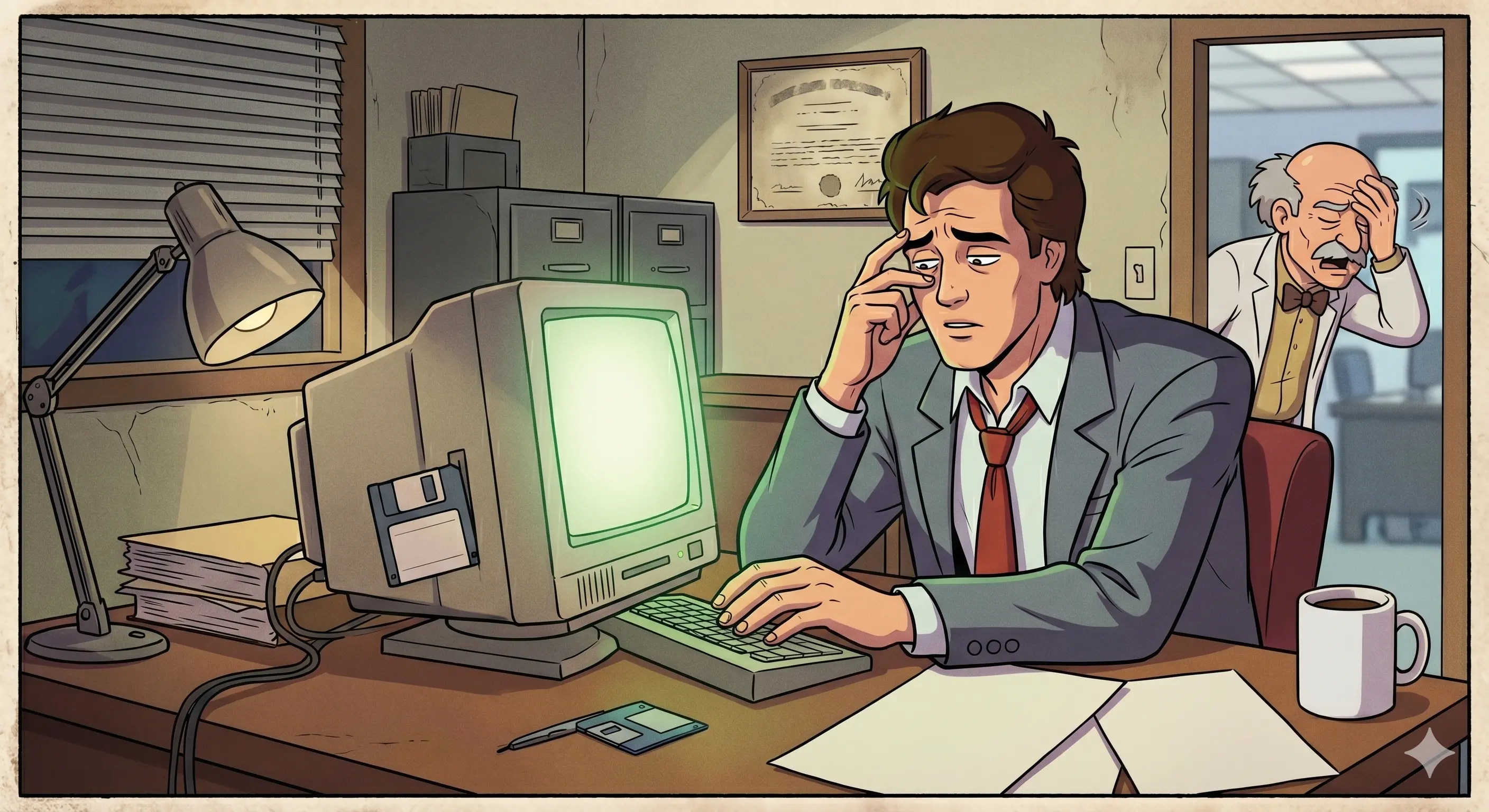
I’ve read numerours failure essays.
Most of them are, themselves, failures.
They are predictable, sanitized, and completely miss the point of the question. They follow a script so tired that an admissions officer can see the ending from the first sentence.
It goes like this:
“I was young and overconfident.”
A project was at risk.
“I made a mistake, letting my team/client down.”
I worked 80 hours straight, saved the project from total disaster.
“I learned the profound importance of humility and teamwork.”
This isn't an essay about failure. It's a humblebrag wrapped in a success story. It’s the single most common and least effective approach in MBA applications, especially from the hyper-competitive Indian applicant pool.
Admissions committees are not impressed. They are bored.
If this sounds like the essay you've written or are planning to write, stop. You are walking into a trap. Let's dismantle it and build something that actually works.
Why They Ask About Failure (And It’s Not to Judge Your Character)
Conventional wisdom says the failure essay is a character test. It’s a chance to show you’re human, you’re resilient, you can bounce back.
This is dangerously simplistic.
Resilience is a cheap commodity in the world of elite MBA applications. Every single applicant from a top feeder firm—be it McKinsey, Goldman Sachs, or Google India—is resilient. They’ve all pulled all-nighters and survived tough feedback. Claiming resilience is like claiming you know how to use Microsoft Excel. It’s table stakes.
The failure essay is not a character test. It is a cognitive test.
The AdCom wants to answer one question: How does this person think when the stakes are real and their own ego is on the line?
They are looking for evidence of:
High-Level Self-Awareness: Can you accurately identify the root of your own misjudgment, or do you blame external factors?
Analytical Rigor: Can you deconstruct a complex situation, isolate variables, and diagnose the precise point of failure in your own thinking process?
Ability to Synthesize and Evolve: Can you move beyond a simple "lesson learned" and articulate a new, more sophisticated mental model for future decisions?
This is the work of a senior leader, a partner at a consulting firm, or a C-suite executive. They don’t just “learn from their mistakes.” They conduct post-mortems, build new frameworks, and install systems to prevent the same failure from happening again.
Your failure essay is a simulation. Can you demonstrate that level of thinking now?
The Indian Applicant Trap: The Pressure for Perfection
The Indian applicant landscape is brutal. The sheer volume of candidates from IT, engineering, and finance creates a sea of sameness. In this environment, the cultural pressure to present a flawless, ever-ascending career trajectory is immense.
This leads to two critical errors in the failure essay:
1. The "Safe" Failure: The chosen failure is so minor it’s meaningless. “I once missed a minor deadline on an internal report.” This tells the AdCom nothing, except that you’re too afraid to be vulnerable. It signals a lack of self-awareness and an inability to engage in meaningful reflection.
2. The "It-Wasn't-Really-My-Fault" Failure: This is the most common variant I see from Indian IT project managers. The story inevitably involves a difficult client, changing requirements, and a junior team. The applicant positions themselves as the hero who, despite these impossible circumstances, worked tirelessly to salvage the project.
Let me be direct: This essay screams, “I don’t take real ownership.” By subtly blaming the client, the team, and the context, you are showing the admissions committee that you cannot perform an honest autopsy on your own decisions. You are focused on effort, not insight.
I once worked with a candidate from a large Indian IT services firm. His first draft was a classic of the genre. A demanding American client, a project with scope creep, a team that wasn't skilled enough. He was the hero who coded through the night.
I stopped him. "Where did you fail?" I asked.
He was silent.
"Did you fail to set boundaries with the client during the kickoff?"
"Did you fail to accurately assess your team's skills before committing to the timeline?"
"Did you fail to communicate the risks of scope creep to your own leadership early and forcefully?"
The failure wasn't the project going off the rails. The failure was his own judgment at the very start. He had a framework for managing code, but not for managing contracts, people, and risk. Once he saw that, he could write a completely different—and far more powerful—essay.
The 2% Framework: Moving From Redemption to Root Cause Analysis
The top 2% of applicants treat the failure essay not as a story, but as an analytical debrief. They don't seek redemption; they demonstrate superior thinking.
Here is the framework to get there.
Step 1: Choose a Failure of Judgment, Not Circumstance.
A project failing because of a sudden market crash or a global pandemic is a story about circumstance. It’s dramatic, but it doesn't reveal much about you.
A project failing because you misjudged the political motivations of a key stakeholder is a failure of judgment. It’s a story about your blind spots. This is the gold mine.
Pick a moment where you held a strong belief, acted on it, and were proven decisively wrong by the outcome. The failure should be professional, have clear consequences, and be entirely your responsibility.
Step 2: Conduct the Brutal Autopsy.
Forget the narrative arc. Use an analytical structure. Answer these questions with the cold precision of a surgeon.
* The Flawed Assumption: What was the core belief I held that turned out to be wrong? (e.g., "I believed that a technically superior product would automatically gain market adoption without significant marketing spend.") Be specific.
* The Actions Driven by the Assumption: What specific actions did I take because of this belief? (e.g., "I allocated 90% of our seed funding to engineering and only 10% to go-to-market.")
* The Collision with Reality: Describe the specific moment or event where my assumption was shattered. (e.g., "We launched to critical acclaim from tech bloggers, but achieved only 500 sign-ups in three months because our target customer had no idea we existed. A competitor with an inferior product but a massive digital ad budget captured the market.")
* The Second-Order Consequences: What were the ripple effects of the failure? (e.g., "Team morale plummeted, we had to do a painful pivot, and I lost credibility with my co-founder, which ultimately strained our relationship.")
Step 3: Articulate the New Mental Model.
This is the step that separates the exceptional from the merely good. Do not end with a platitude like, “I learned to value marketing.” That’s a C-level insight.
Articulate your new, upgraded operating system.
* Weak: "I now understand the importance of a balanced approach between product and marketing."
* Strong: "My mental model for product launches has fundamentally changed. I no longer see go-to-market as a separate function, but as an integral part of product development. For my next venture, I developed a 'Go-to-Market Hypothesis' for every feature we built, which had to be validated with customer interviews before a single line of code was written. This framework directly led to our second product acquiring 10,000 users in its first month because we had built the marketing channels in parallel with the product itself."
The second example doesn't just state a lesson. It describes a new, repeatable system born from the ashes of the failure. It shows you didn’t just get sad; you got smarter. You built an algorithm to prevent that class of error in the future.
Before and After: The Difference in Action
Let’s see it in practice.
Applicant A (The 98%):
"My biggest failure was on a consulting project where I was leading a workstream to optimize a client's supply chain. I was so focused on my own data analysis that I didn't communicate effectively with other teams. This led to our recommendations overlapping and creating confusion for the client. The partner was disappointed. I learned that teamwork and communication are crucial for success in consulting."
Critique: Generic, low-stakes, boring lesson. The AdCom has read this 500 times.
Applicant B (The 2%):
"My biggest failure was during the due diligence for a $50M acquisition. My analysis, which focused on financial synergies, showed a clear 'buy' signal. I built the model, it was technically perfect, and I presented it with confidence. The deal went through. Six months later, the integration was a disaster. The acquired company’s top talent walked out, and the expected synergies never materialized. My failure was not in my financial model; my model was correct. My failure was one of imagination. I had treated the company as a spreadsheet. I had no framework for quantifying cultural risk.
As a direct result, I spent the next quarter building one. I developed a 'Cultural Diligence Scorecard,' incorporating metrics like leadership decision-making styles, employee promotion velocity, and Glassdoor sentiment analysis. I piloted it on a subsequent, smaller deal. The scorecard flashed red, predicting a 40% talent attrition rate post-merger. Based on my analysis, we walked away from a deal that looked, on paper, spectacular, but would have destroyed shareholder value. My financial model wasn't wrong, but my strategic framework was incomplete. I didn't just learn a lesson; I engineered a permanent solution to my own analytical blind spot."
Critique: This is an elite response. The applicant takes full ownership of a high-stakes mistake, skips the emotional fluff, and demonstrates the exact kind of systems-level thinking required of a future executive.
The Takeaway: Stop Looking for a Hero
Admissions committees don't need you to be a flawless protagonist who saves the day in the eleventh hour. They already know you aren't perfect. What they want to see is that when you inevitably stumble, you possess the intellectual humility and analytical horsepower to diagnose why it happened, pull out the root cause, and rewrite your own operating system.
If your failure essay currently reads like a movie script where you ride in on a white horse to fix a mess, scrap it. Take a deep breath, look at your biggest misstep with cold objectivity, and show them how you built a better algorithm from the data. That is how you break out of the sea of sameness and get into the top 2%.